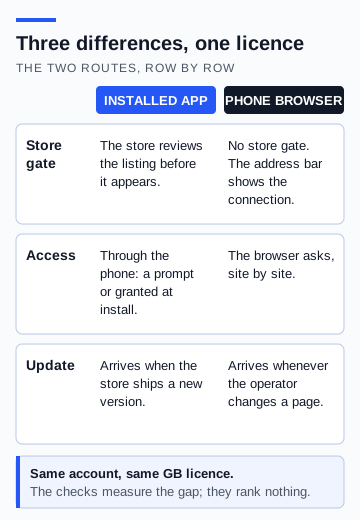
An installed app and a browser tab reach the same licensed operator by different routes. Ten checks, each with a measurement and a pass line, separate what actually changes from what is only assumed to.
Deleting a casino app removes the app; it does not remove the account, the deposit limit or the record the operator holds. This bench reads the Google Play, Chrome, Apple and Gambling Commission pages that say where each piece of data lives, and sets out the inspection sheet so anyone can run it on a named app.
A repeatable inspection separates what an app declares, what you allow and what the phone records, with a worked example that makes no claims about a named casino.
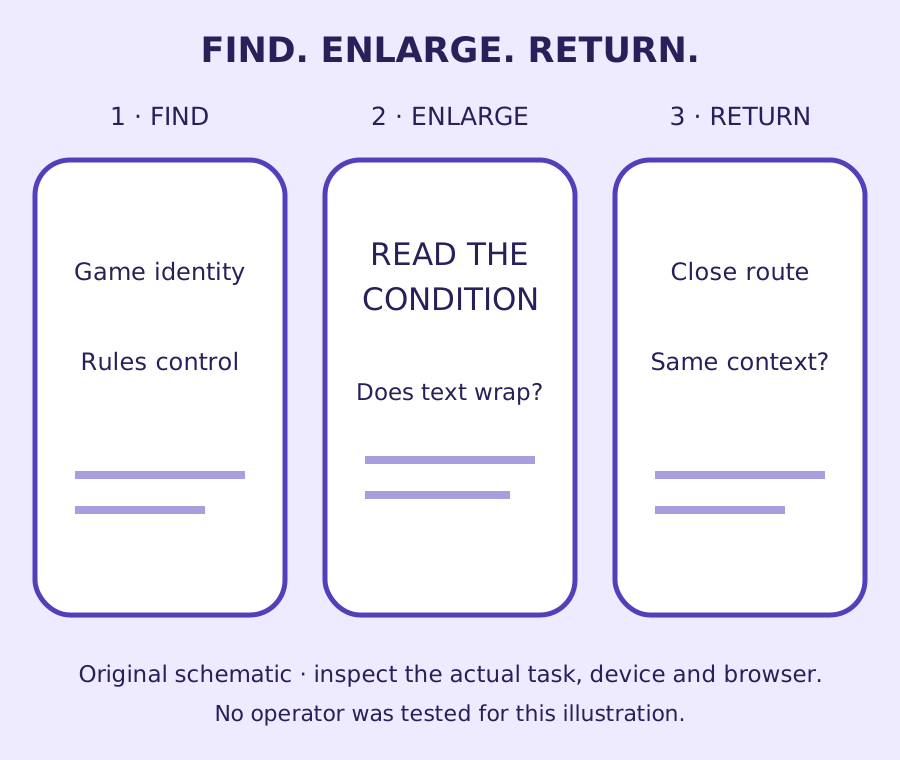
Pinch the page, or raise the browser’s own zoom: Page Zoom in Safari, Default zoom in Chrome. Then check that nothing is lost at 200%, the WCAG 2.2 threshold.
Are there security differences when playing casino games via an app versus a mobile browser?
The documented difference is disclosure. An app on Google Play must carry a Data safety section describing what it collects and shares and how it protects the data, 'through security practices like encryption'. A mobile site in Chrome has per-site permissions the reader sets and can reset. Neither page read for this entry rates one route as safer, and this bench does not.
Is it safer to use an app or a website on your phone?
The pages read do not answer that, and this bench measured nothing that would. What they establish is where each route's data sits. A Play-listed gambling app must hold a valid gambling licence for each country it is distributed in and declare its data practices. A site in Chrome keeps only what the reader lets it keep, and its permissions can be reset for that site alone.
Your own phone answers that, per app. On an iPhone, 'Scroll down to find out which apps are using mobile data' under Settings > Mobile Data. On a Pixel, 'look below the graph' under Network & internet. No figure for any casino app was measured for this entry.